
We are registered with the Department of Higher Education and Training under the Continuing Education and Training Act No. 16 of 2006. DHET Centre Number: 899994812. Further accredited by the Quality Council for Trades and Occupations (QCTO) Accreditation Number: 07-QCTO/SDP110722.
Accredited with CETA ACCREDITATION NO: ACC/23/07/00015 and TETA ACCREDITATION NO: TETA 22-1553 under the Skills Development Act, 97 of 1998. Company Registration Number: 2013/224763/07.
Certificate: Horse and Trailer Truck Training
Unit Standard No: 93793
Unit Standard Credits: 15
NQF Level: 3
Course Duration: 2 weeks
Cost Per Person: R 9500
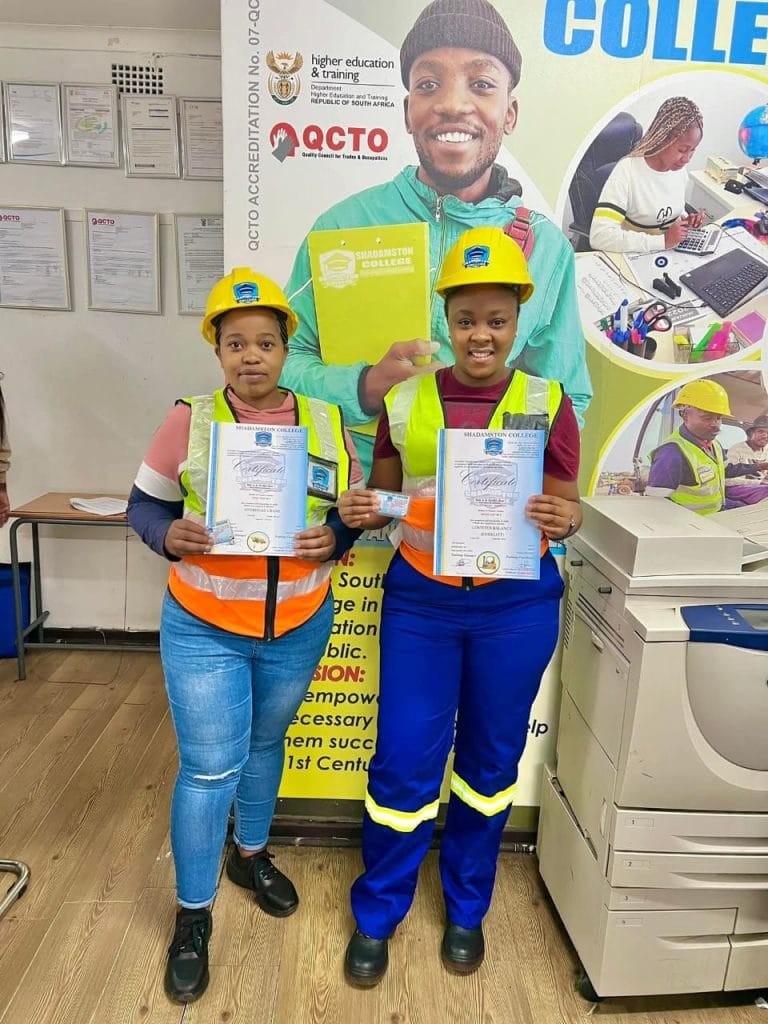
Upon successful completion of the course, you will be awarded a CERTIFICATE.
We offer free accommodation to our learners, as well as job assistance to help graduates pursue employment opportunities after completing their training.
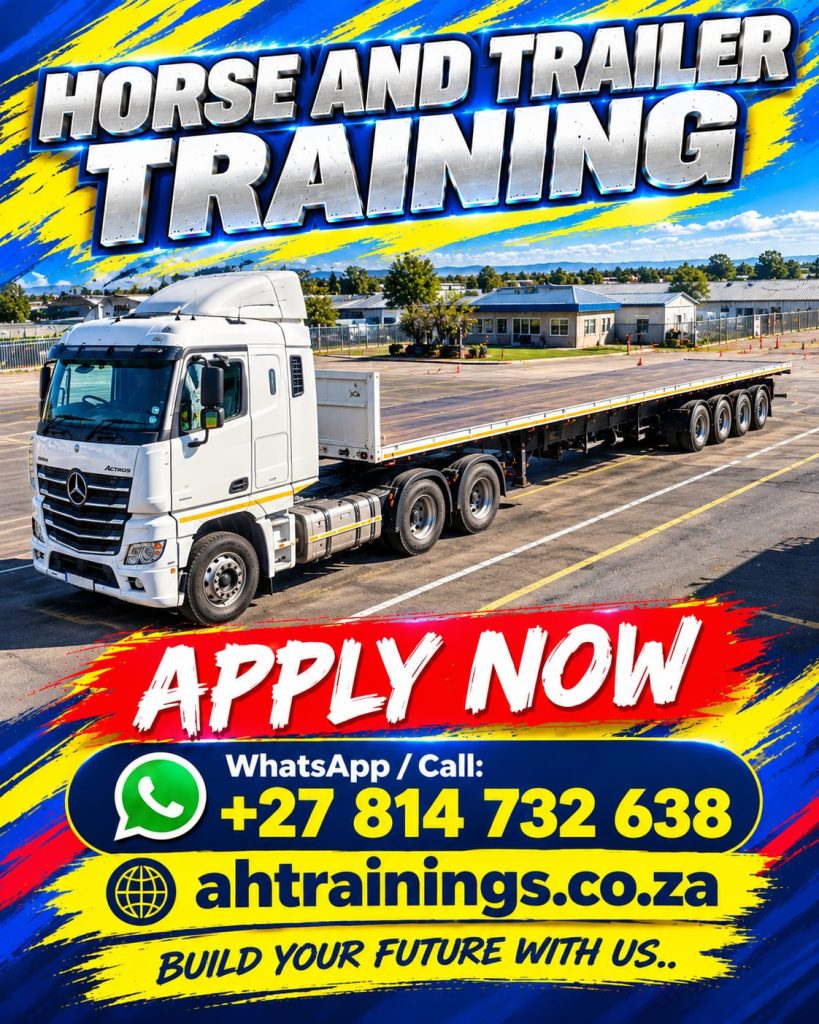
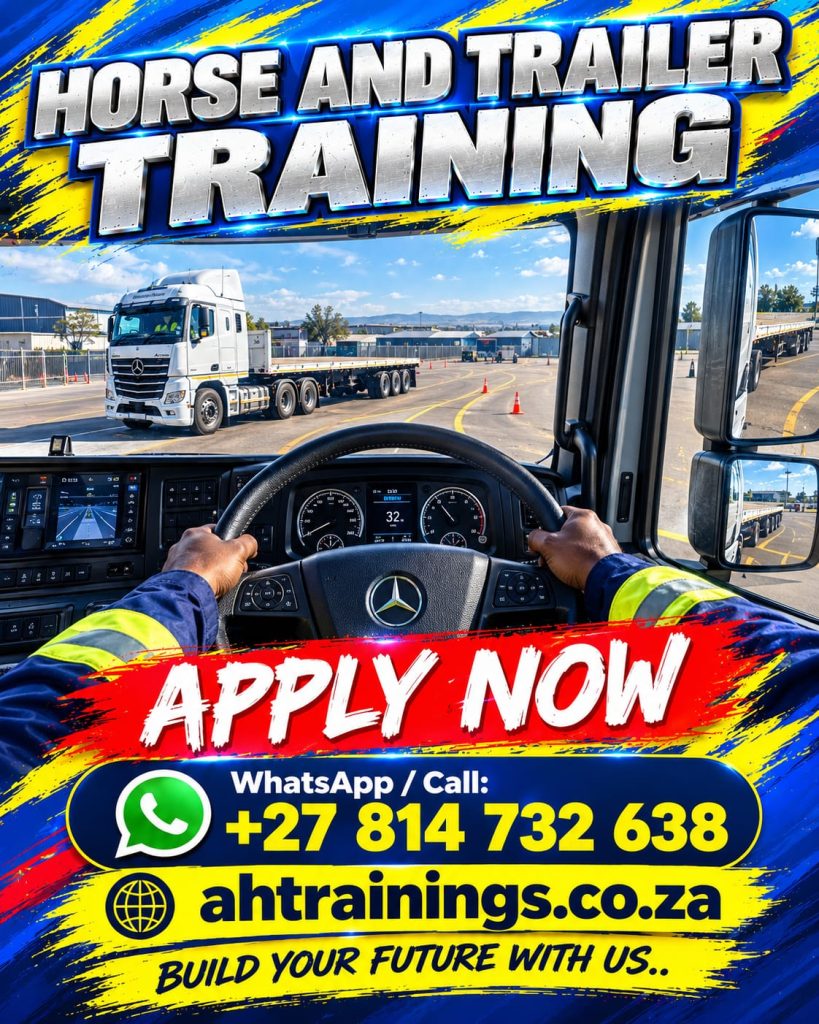
Our Horse and Trailer Training Course provides learners with the essential theoretical knowledge and practical skills needed to operate a horse and trailer truck safely, confidently, and professionally. The training covers vehicle controls and functions, pre- and post-operation inspections, coupling and uncoupling procedures, trailer handling, load management, safe driving techniques, reversing and manoeuvring, road safety, braking systems, vehicle stability, and correct operating procedures.
Learners also gain an understanding of workplace hazards, vehicle safety requirements, responsible driving practices, and the importance of maintaining control of a horse and trailer combination in different driving and working conditions. Emphasis is placed on safe vehicle operation, proper inspection procedures, and following manufacturer guidelines and applicable industry standards.
Combining classroom-based theory with practical training, the course helps learners build the competence, confidence, and safety awareness required to operate horse and trailer trucks in professional working environments. This training is suitable for individuals looking to develop their heavy-vehicle operating skills and pursue opportunities in transport, logistics, freight distribution, long-distance haulage, construction, and other commercial industries.
Theory Assessment – 20%
Learners complete a written theory assessment designed to evaluate their understanding of horse and trailer trucks, including vehicle functions, operating procedures, reversing techniques, safety requirements, manoeuvring, and responsible vehicle operation.
Practical Assessment – 80%
The practical assessment focuses on hands-on horse and trailer operation. Under the supervision of a qualified instructor, learners demonstrate their ability to operate, manoeuvre, and reverse the horse and trailer combination safely and confidently. The assessment evaluates their reversing techniques, vehicle control, manoeuvring skills, and ability to apply the procedures covered during training.
Competency Assessment
Upon completion of the training and assessment process, qualified assessors and moderators evaluate each learner’s performance to determine whether the required competency standards have been met. The evaluation focuses on safe vehicle operation, effective manoeuvring, reversing ability, and the proper handling of a horse and trailer combination.
Introduction to Horse and Trailer Trucks
Learners are introduced to horse and trailer trucks, their applications, major components, operating functions, safety features, warning systems, dashboard indicators, operating limitations, load capacities, and relevant manufacturer guidelines. The training develops an understanding of how the truck and trailer operate together and the responsibilities involved in handling a heavy vehicle combination.
Pre-Operational Inspection
Training covers thorough pre-operational inspections of the horse and trailer combination, including checking tyre condition and pressure, fluid levels, braking systems, mirrors, lights, coupling connections, and other essential components. Learners are introduced to correct start-up and shutdown procedures, identifying and reporting mechanical defects, consulting the manufacturer’s operating manual, and parking and securing the vehicle according to workplace requirements. Additional attention is given to reversing safety, blind spots, vehicle positioning, and safe manoeuvring. Learners also develop an understanding of load security, weight distribution, balance, and vehicle stability to help ensure the combination is prepared for safe operation before departure.
Safe Operating Practices: Learners develop safe and responsible driving practices, including maintaining vehicle stability, recognising potential hazards, understanding warning indicators, following applicable safety procedures, and operating safely in different weather and road conditions. Training also covers safe reversing practices, blind-spot awareness, checking the surrounding area before reversing, and appropriate responses to mechanical failures and emergency situations.
Loading & Unloading Procedures: Learners are introduced to safe loading and unloading practices, proper load distribution, material movement, operating on uneven or inclined surfaces, preventing overloading and load instability, and the appropriate use of spotters, banksmen, and recognised hand signals during loading, unloading, reversing, and manoeuvring where required.
Driving Techniques: Practical training covers safe starting, moving, manoeuvring, reversing, and stopping procedures. Learners develop techniques for straight-line reversing, controlled reversing, positioning the Superlink in confined areas, using mirrors effectively, checking blind spots, and following spotter or banksman instructions. Training also covers operating in different environments, maintaining appropriate speeds, managing loads safely, following temporary safety signs and site requirements, and operating the vehicle according to manufacturer recommendations.
Post-Operation Procedures: Learners are trained to safely park and secure the vehicle, follow correct shutdown procedures, carry out basic cleaning and post-operation checks, complete required logbooks and inspection reports, and report defects, incidents, or maintenance concerns, including any issues identified during reversing or manoeuvring operations.
Driver Responsibilities: Superlink drivers have an important responsibility for maintaining safe vehicle operations. Learners are taught to recognise situations involving unsafe vehicles, loads, road conditions, or work environments and to report concerns to the appropriate supervisor. Drivers are also responsible for ensuring reversing areas are clear, checking blind spots, using appropriate reversing aids and signals, and maintaining effective communication with spotters or banksmen where required. Operations should only continue once identified hazards have been addressed and safe operating conditions have been restored.

Not Familiar with Johannesburg or Gauteng?
No problem! We offer FREE transport from the following pick-up points to our training centre:
📍 MTN Taxi Rank
📍 Johannesburg Park Station
📍 Germiston Taxi Rank
📍 O.R. Tambo International Airport



Get in Touch with Us, Send us a Email
Employment Opportunities
After successfully completing your Training, you are welcome to submit your CV to cv@ahtrainings.co.za. We are regularly contacted by recruitment agencies and employers seeking qualified and competent candidates, and we may refer suitable candidates when opportunities become available.
Graduates are also encouraged to actively apply for positions through leading online job portals such as Indeed, CareerJunction, LinkedIn, and other recruitment platforms to increase their employment opportunities.
While successful completion of the course enhances your employability, securing employment remains subject to the recruitment process and the requirements of individual employers. Our goal is to help equip you with the skills and qualifications needed to pursue rewarding career opportunities.
Career Opportunities
Horse and Trailer Driver Training can open up career opportunities in the transport, logistics, freight, distribution, construction, mining, agricultural, retail, and manufacturing sectors. Skilled and qualified drivers may pursue roles such as Horse and Trailer Drivers, Long-Distance Truck Drivers, Heavy Vehicle Drivers, Freight Transport Drivers, Logistics Drivers, Distribution Drivers, and Transport Operators.
Horse and trailer drivers may find employment opportunities with transport and logistics companies, freight and distribution businesses, mining operations, construction companies, agricultural enterprises, retail and wholesale businesses, manufacturing companies, and large supply-chain organisations that rely on the transportation and delivery of goods.

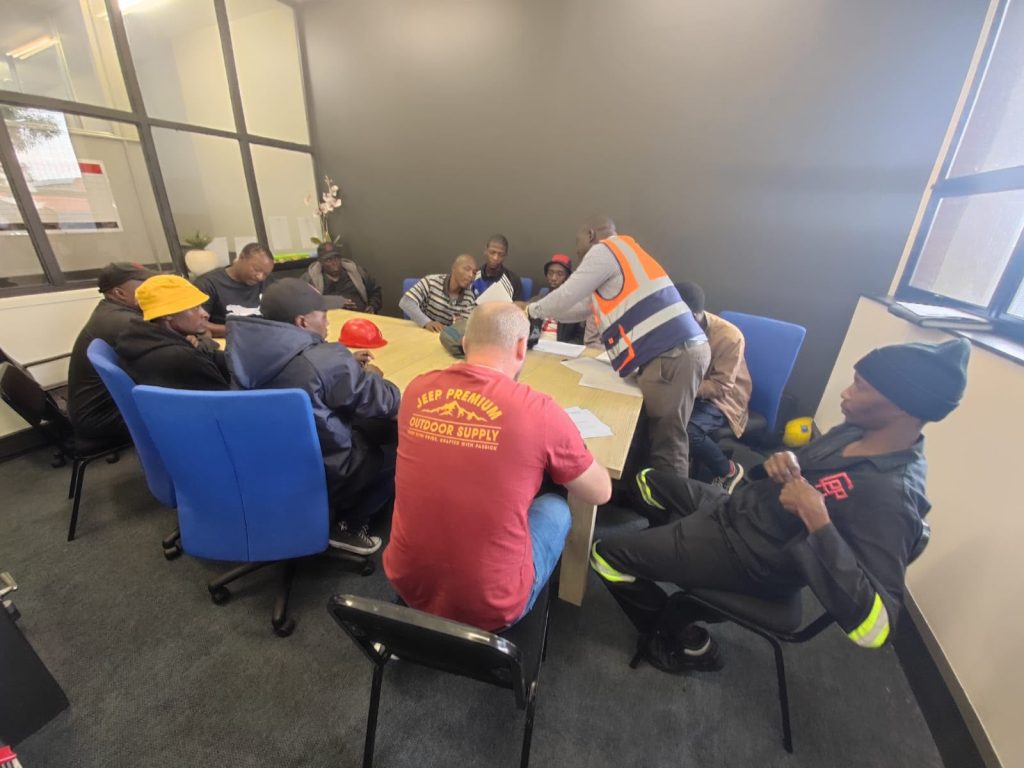
On-Site Company Training
We bring the training to you.
Our team is available to travel to companies across South Africa to provide professional on-site training for your employees.
Whether you need to train a small group or an entire workforce, we deliver the same high standard of practical, industry-focused instruction at your premises. We work with businesses of all sizes and can schedule training at times that suit your operations.
Partner with us to keep your workforce skilled, compliant, and workplace-ready.
Explore Our Training Courses
We offer a wide range of practical training courses designed to help learners develop the skills and knowledge needed for careers in transport, construction, mining, engineering, industrial operations, safety, and skilled trades. Explore our courses below and choose the training programme that best matches your career goals.
Heavy Equipment & Machinery Training
Superlink Training · Reach Stacker Training · Forklift Training · 777 Dump Truck Training · ADT Dump Truck Training · Drill Rig Training · LHD Scoop Training · Mobile Crane Training · Excavator Training · TLB Training · Front End Loader Training · Tower Crane Training · Overhead Crane Training · Reach Truck Training · Grader Training · Bulldozer Training · Bobcat Training · Road Roller Training · Truck Mounted Crane Training · Tractor Training · Telehandler Training · Tipper Truck Training · Superlink Reverse Training · Sidetipper Training
Safety & Occupational Training
Hazchem Training · Working at Heights Training · Safety Officer Training · Rigging Training · First Aid Training · Fire Fighter Training
Technical Trades & Welding Training
Plumbing Training · Carpentry Training · Pipe Fitter Training · Boilermaking Training · Electrical Training · Welding Training · Arc Welding Training · Double Coded Welding Training · CO₂ Welding Training · Stick Welding Training · Gas Welding Training · TIG Welding Training · MIG Welding Training · Aluminium Welding Training · Argon Welding Training · Stainless Steel Welding Training
FAQs
What is Horse and Trailer Truck Training?
Horse and Trailer Truck Training provides learners with the theoretical knowledge and practical driving skills required to operate a horse truck and trailer combination safely and confidently in professional transport and logistics environments.
What does Horse and Trailer Driver Training include?
Horse and Trailer Driver Training covers vehicle controls, pre-trip inspections, coupling and uncoupling procedures, load management, vehicle positioning, manoeuvring, reversing, safe driving techniques, vehicle stability, road safety, and post-operation procedures.
How much does it cost to get your Horse and Trailer Training Course certification?
The full Horse and Trailer Training Course costs R9,500, covering both theoretical and practical training components. Practical training includes supervised vehicle operation, driving, manoeuvring, and reversing techniques to help learners develop the skills needed to handle a horse and trailer combination.
How long does Horse and Trailer Truck Training take?
Our Horse and Trailer Truck Training Course is completed over 2 weeks, combining structured theoretical instruction with hands-on practical driving experience. Learners develop the knowledge and practical skills needed to operate a horse and trailer combination safely and confidently in a professional working environment.
Is Horse and Trailer Training practical?
Yes. Horse and Trailer Driver Training includes hands-on practical instruction, allowing learners to develop their ability to control, manoeuvre, reverse, couple, and operate a horse and trailer combination safely under professional supervision.
Does Horse and Trailer Training include a practical assessment?
Yes. Learners undergo an assessment of their theoretical knowledge, practical driving ability, vehicle handling, safety awareness, and ability to operate a horse and trailer combination competently.
What is a Code 14 Diploma?
A Code 14 Diploma is a term sometimes used to describe training associated with heavy-vehicle driving, including articulated trucks and horse and trailer combinations. This type of training aims to develop the theoretical knowledge and practical driving skills required for safe and professional heavy-vehicle operation. The applicable driving licence category and requirements depend on South African driving licence regulations and the vehicle being operated.
Where can I work after completing Horse and Trailer Driver Training?
Horse and Trailer Driver Training can help learners prepare for opportunities in transport and logistics, freight and haulage, goods distribution, construction, mining, agriculture, manufacturing, and other industries that rely on heavy vehicles to transport goods.
What jobs can I get after Horse and Trailer Training?
Potential career opportunities include Horse and Trailer Truck Driver, Heavy Vehicle Driver, Freight Transport Driver, Long-Distance Truck Driver, Transport Operator, Logistics Driver, Distribution Driver, and Fleet Driver. Employment opportunities depend on the employer’s requirements, the appropriate driving licence, relevant experience, and any additional qualifications required for the position.
How much does it cost to renew a Horse and Trailer certificate and licence, and how long is it valid?
The Horse and Trailer certificate and licence are listed as valid for 2 years, with a renewal cost of R1,300 and same-day renewal available.
How much do you get paid as a Horse and Trailer driver in South Africa?
A Horse and Trailer driver in South Africa can earn around R565,222 per year, depending on experience, employer, location, working hours, and additional allowances. This is approximately R47,102 per month before deductions. Actual earnings can vary considerably between employers and roles.
Horse and Trailer Truck Professional Driver Training Fees, Course Prices & Certificate: Learners can contact us for the latest Horse and Trailer Truck Professional Driver training fees and course prices, Training Academy Cost Price List including available classes, training requirements, assessment, and certification. The Horse and Trailer Truck Professional Driver certificate cost may depend on the selected training programme and assessment requirements. Learners can also enquire about Horse and Trailer Truck Professional Driver certification, Horse and Trailer Professional Truck Driving training, Horse and Trailer Professional Driver courses, Horse and Trailer Truck Driving courses, Horse and Trailer Truck Driving classes, and training availability near you. If you are searching for Horse and Trailer Truck Professional Driver training near me, Horse and Trailer Professional Truck Driving training near me, Horse and Trailer Professional Driver courses near me, Horse and Trailer Truck Driving courses near me, Horse and Trailer Truck Driver courses near me, Horse and Trailer Professional Truck Driving classes near me, or a Horse and Trailer Truck Professional Driver training school near me, contact us for course availability, fees, certification information, and enrolment information on WhatsApp +27 814 732 638.