
We are registered with the Department of Higher Education and Training under the Continuing Education and Training Act No. 16 of 2006. DHET Centre Number: 899994812. Further accredited by the Quality Council for Trades and Occupations (QCTO) Accreditation Number: 07-QCTO/SDP110722.
Accredited with CETA ACCREDITATION NO: ACC/23/07/00015 and TETA ACCREDITATION NO: TETA 22-1553 under the Skills Development Act, 97 of 1998. Company Registration Number: 2013/224763/07.
Certificate: Plumbing Short Course
Unit Standard No: 119075
Unit Standard Credits: 8
NQF Level: 2
Course Duration: 4 weeks
Cost Per Person: R 8500
Personal Protective Equipment (PPE): Required
Upon successful completion of the course, you will be awarded a CERTIFICATE.
We offer free accommodation to our learners, as well as job assistance to help graduates pursue employment opportunities after completing their training.
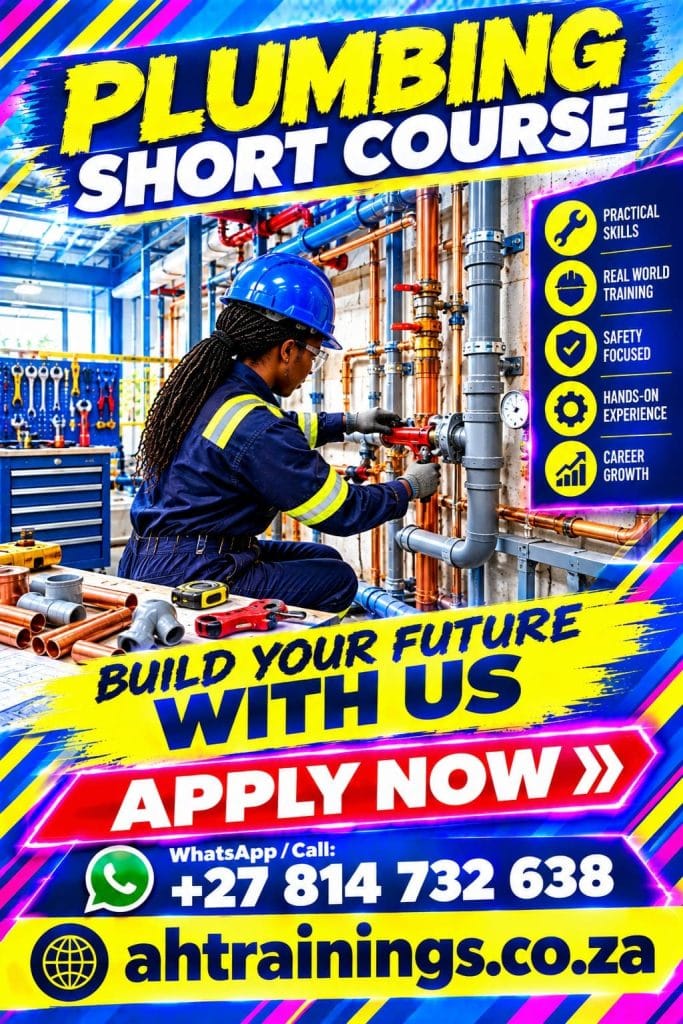
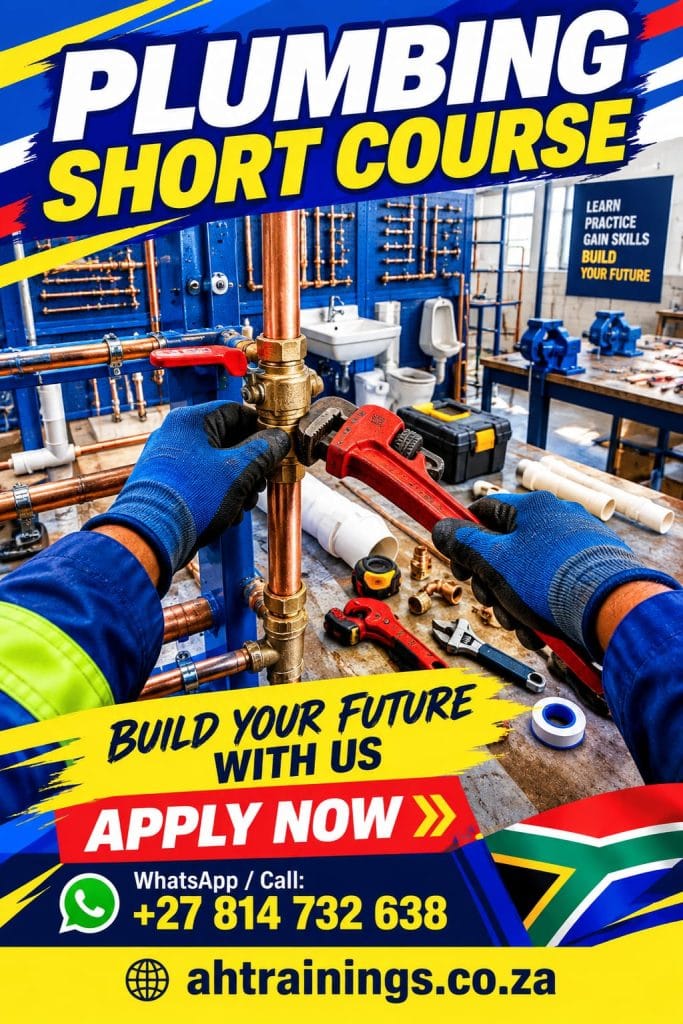
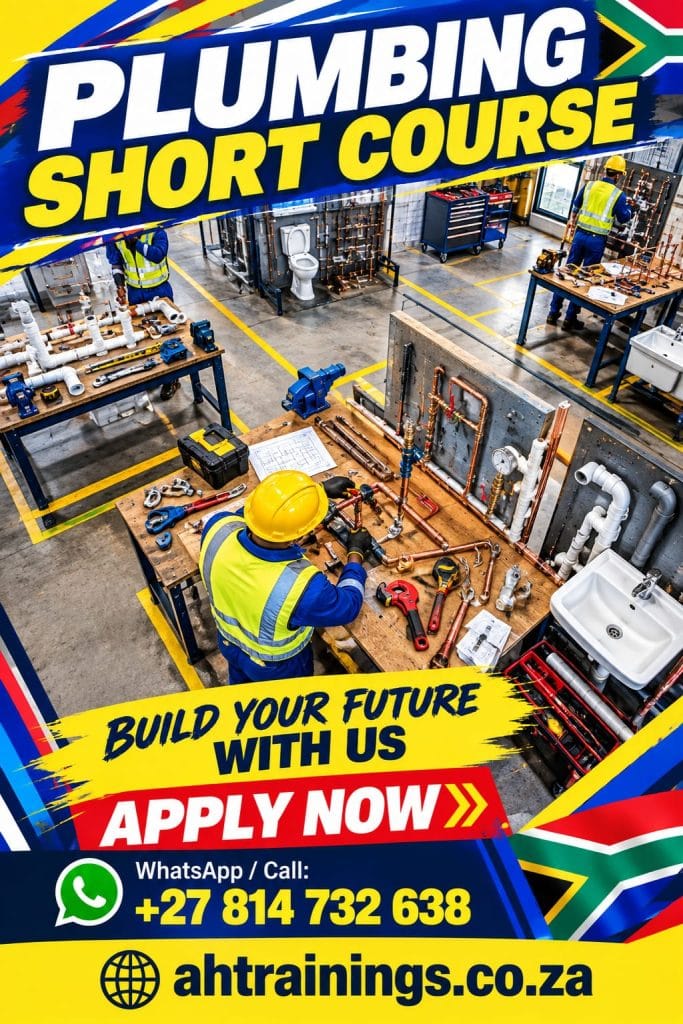
Our Plumbing Training Course is designed to equip learners with the knowledge and skills required to safely and effectively carry out plumbing work in residential, commercial, and industrial environments. The training covers essential plumbing systems, pipework, fittings, water supply systems, drainage and waste systems, plumbing tools and equipment, pipe installation, leak detection, maintenance, repairs, and workplace safety procedures. Learners are guided on how to work responsibly while following manufacturer specifications, building requirements, recognised plumbing practices, and workplace safety standards. The course provides valuable skills for individuals seeking opportunities in industries such as construction, property maintenance, residential development, commercial buildings, industrial facilities, plumbing services, and infrastructure development.
Theory Training – 20%: Covers plumbing fundamentals, plumbing systems and components, water supply systems, drainage and waste systems, pipe types and fittings, plumbing tools and equipment, pipe sizing, basic plumbing principles, workplace safety, PPE, hazard identification, maintenance procedures, and recognised plumbing practices.
Practical Training – 80%: Provides hands-on experience in measuring and cutting pipes, joining and installing pipework, fitting valves and fixtures, installing water supply and drainage systems, connecting plumbing fittings, detecting and repairing leaks, testing pipework, carrying out basic maintenance, and completing plumbing installations under professional supervision.
Competency Assessment: Learners are assessed on their theoretical knowledge, practical plumbing skills, correct use of tools and equipment, pipework installation, leak detection, safety awareness, and ability to complete basic plumbing tasks safely and effectively.
Introduction to Plumbing: Understand the role and responsibilities of a plumber, basic plumbing systems including water supply, drainage, sanitation, and heating, workplace health and safety, PPE, hazard control, environmental awareness, plumbing codes and regulations, and the identification of plumbing components.
Tools, Materials & Equipment: Learn about common plumbing tools such as wrenches, pipe cutters, soldering equipment, augers, and pumps, as well as different pipes and fittings including copper, PVC, PEX, steel, and cast iron. Training also covers sealants, gaskets, adhesives, solder, safe tool handling, storage, and maintenance.
Water Supply Systems: Learn the principles of water pressure and flow, installation of supply lines and shut-off valves, hot and cold water systems, tanks, pumps, and water heaters. Learners develop skills in installing and connecting small-scale water supply systems with taps.
Drainage & Waste Systems: Understand gravity drainage, traps, vents, drain pipes, sewage connections, blockages, backflow, and contamination prevention. Training includes installing traps and connecting fixtures such as sinks to drainage systems.
Plumbing Fixtures & Appliances: Learn about the installation and maintenance of toilets, sinks, bathtubs, showers, dishwashers, washing machines, and geysers or water heaters. Training covers correct fixture positioning, sealing, alignment, connection, and testing.
Pipework Skills: Develop skills in measuring, cutting, threading, bending, and joining pipes using methods such as compression fittings, soldering, and gluing. Training also covers pressure testing, leak detection, and building multi-connection pipe networks.
Maintenance & Repair: Learn how to diagnose and repair common plumbing problems such as leaks, burst pipes, blocked drains, and faulty fixtures or fittings. Training covers emergency repairs, replacement of damaged components, drain unblocking, and preventive maintenance.
Final Project & Assessment: Complete practical plumbing tasks that bring together the skills developed throughout the course, including pipework, water supply, drainage, fixture installation, testing, maintenance, and repairs, followed by an assessment of plumbing knowledge, workmanship, safety, and overall competency.
Personal Protective Equipment (PPE)
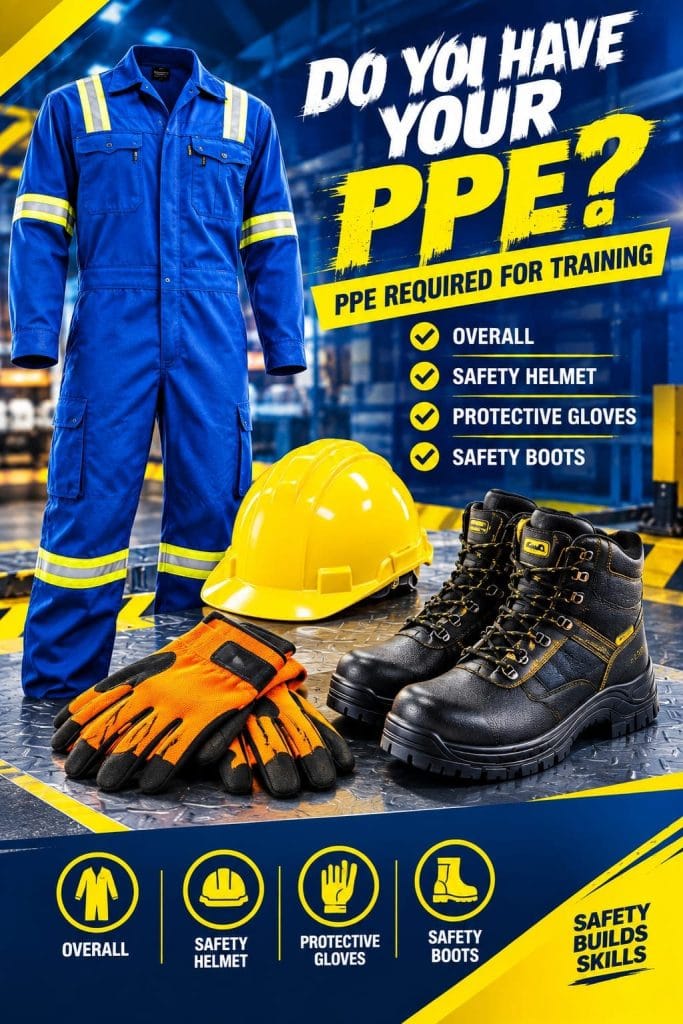
You can either bring your own PPE for training or purchase it from the college for an additional R1,000.
Required PPE: Overall, Safety Helmet, Gloves, Safety Boots.
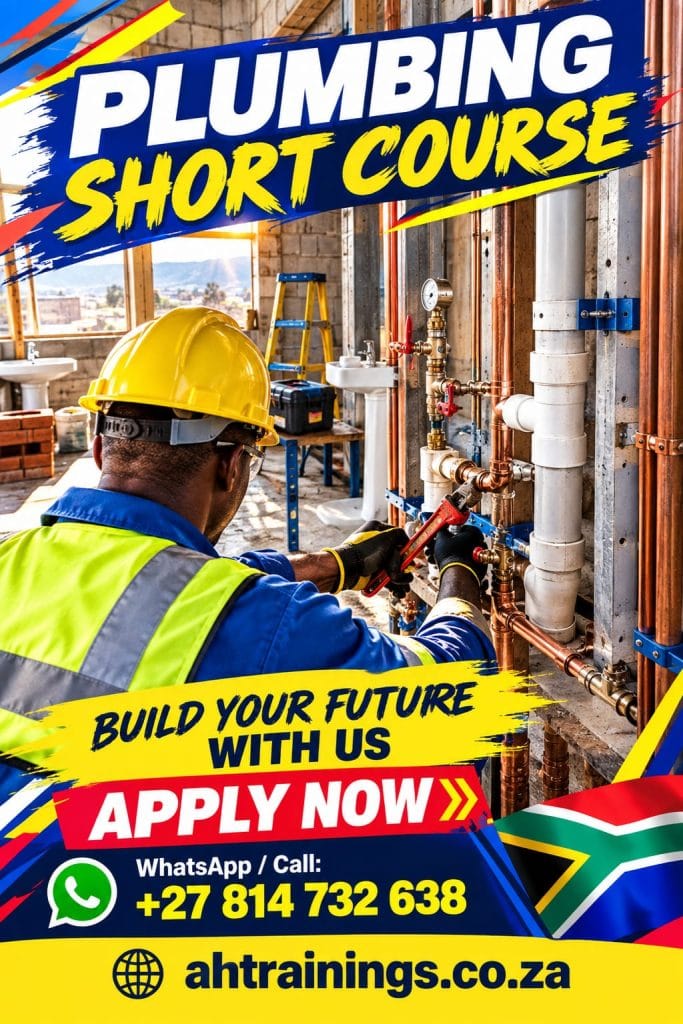
Please Note: The PPE shown in the image is for illustration purposes only. Your PPE does not need to look exactly like the example shown. As long as you have the required PPE listed above, you are welcome to bring your own.

Not Familiar with Johannesburg or Gauteng?
No problem! We offer FREE transport from the following pick-up points to our training centre:
📍 MTN Taxi Rank
📍 Johannesburg Park Station
📍 Germiston Taxi Rank
📍 O.R. Tambo International Airport

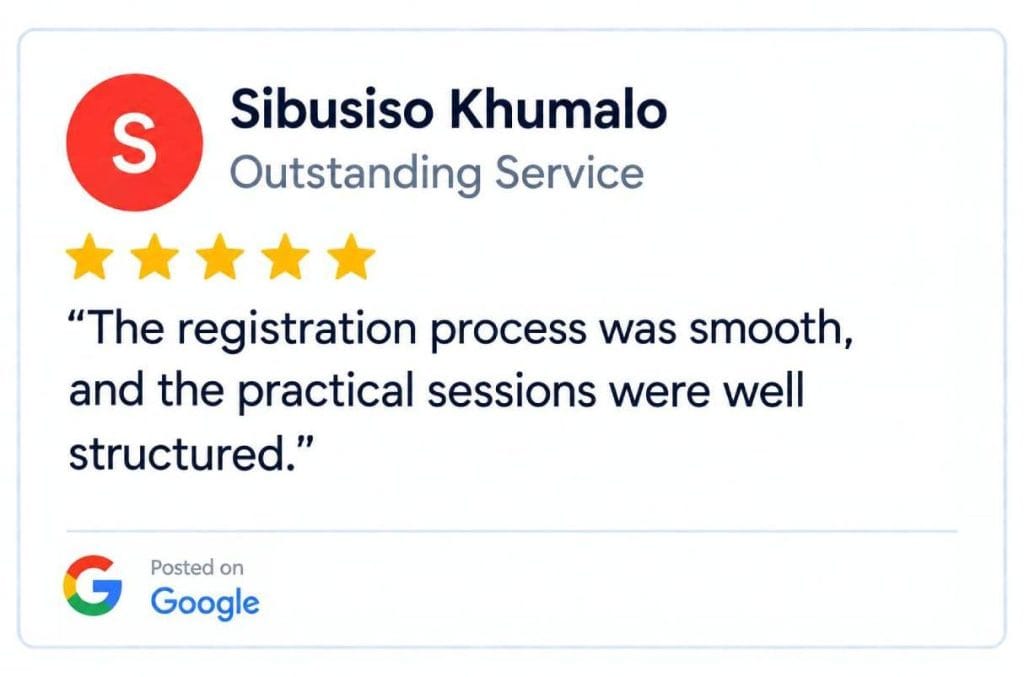
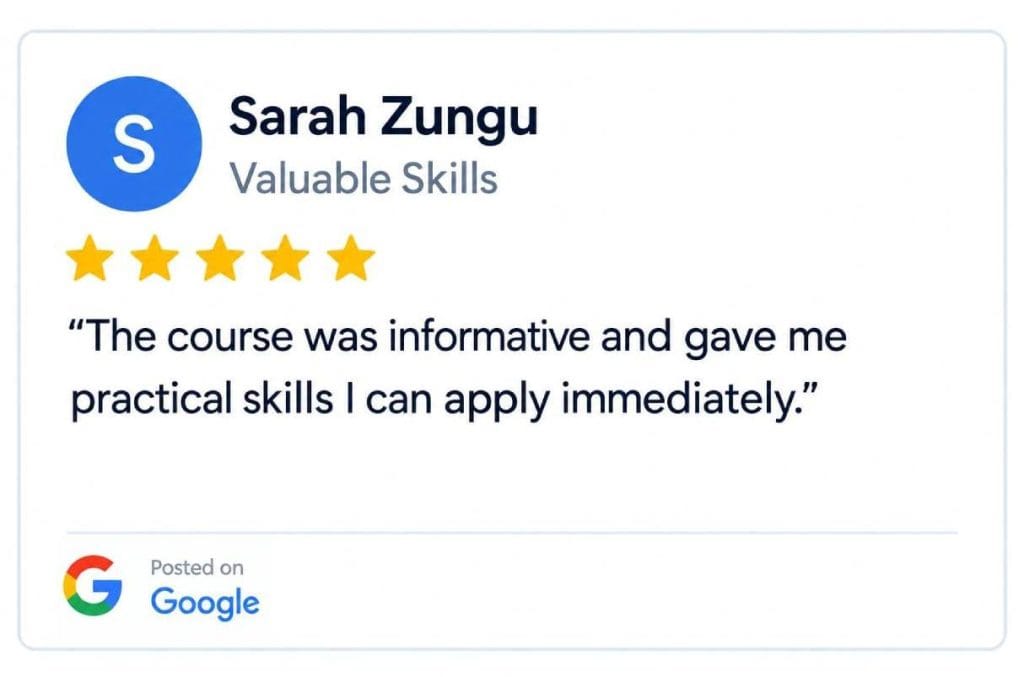
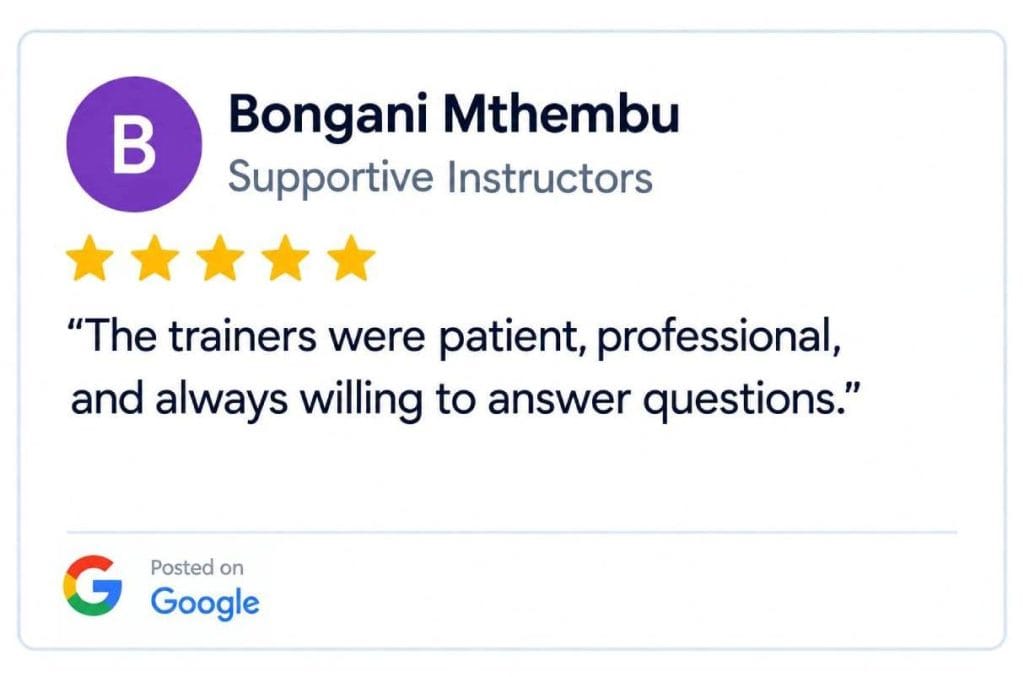
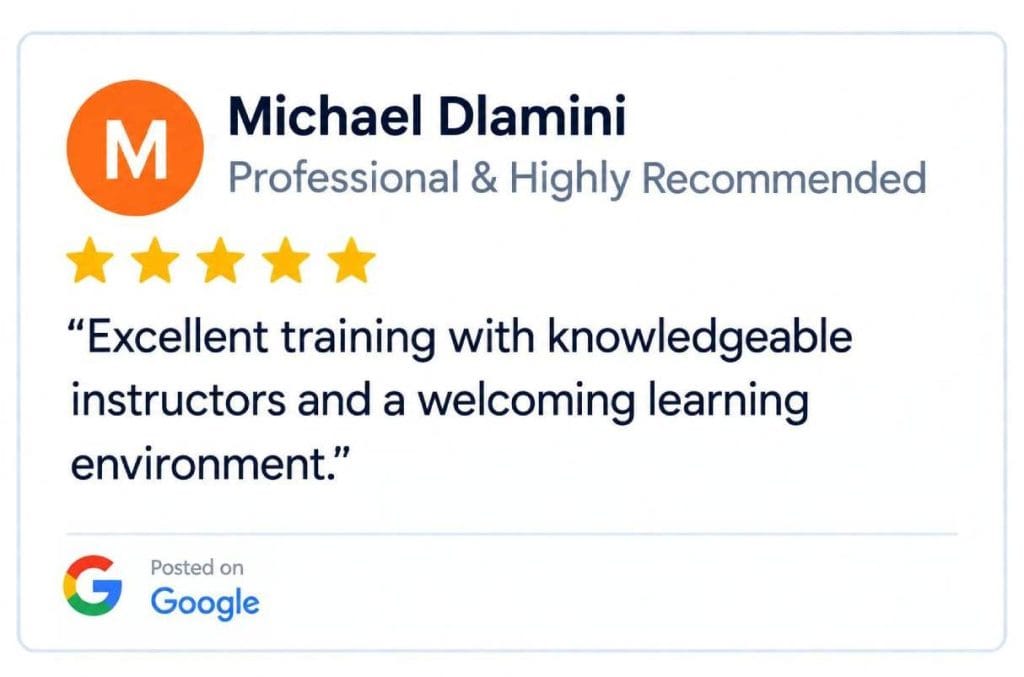
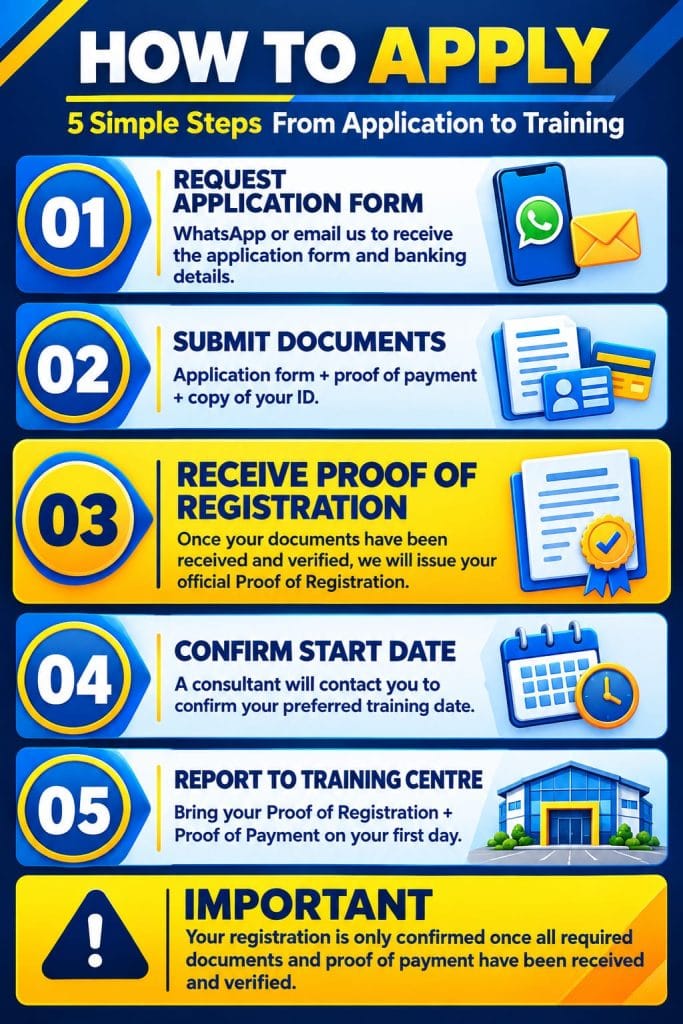

Get in Touch with Us, Send us a Email
Employment Opportunities
After successfully completing your Training, you are welcome to submit your CV to cv@ahtrainings.co.za. We are regularly contacted by recruitment agencies and employers seeking qualified and competent candidates, and we may refer suitable candidates when opportunities become available.
Graduates are also encouraged to actively apply for positions through leading online job portals such as Indeed, CareerJunction, LinkedIn, and other recruitment platforms to increase their employment opportunities.
While successful completion of the course enhances your employability, securing employment remains subject to the recruitment process and the requirements of individual employers. Our goal is to help equip you with the skills and qualifications needed to pursue rewarding career opportunities.
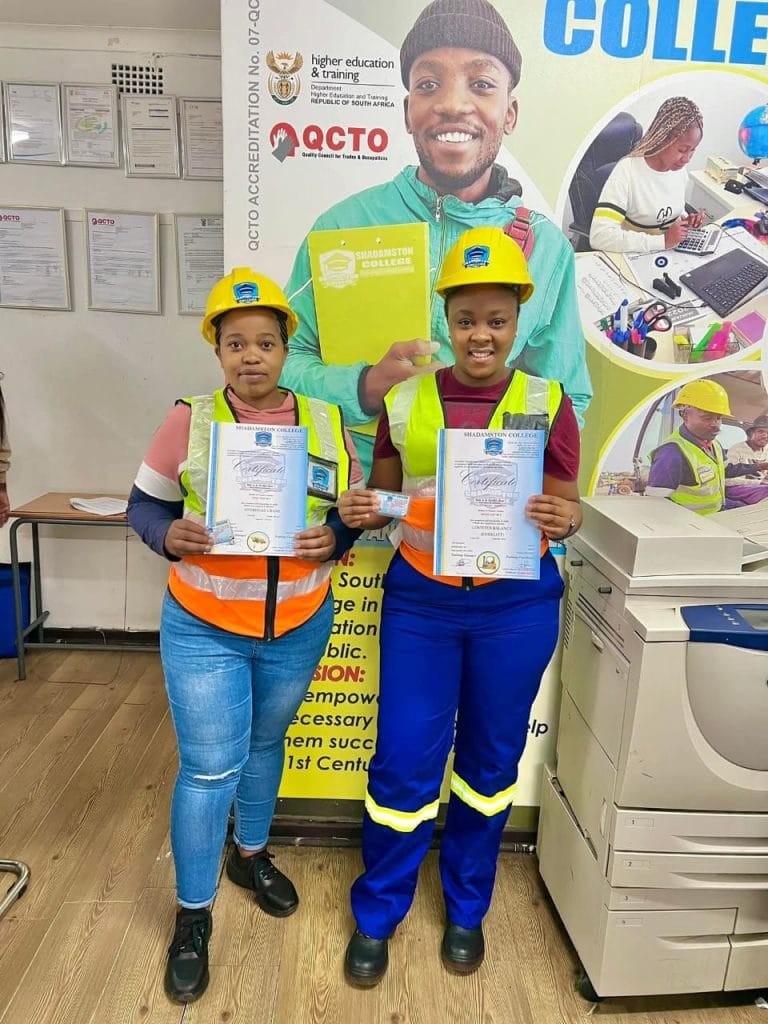
Career Opportunities
Completing Plumbing Training can prepare learners for employment opportunities as a Plumber, Plumbing Assistant, Plumbing Technician, Maintenance Plumber, Plumbing Installer, Pipe Fitter, Drainage Technician, and Plumbing Maintenance Worker.
Plumbers can find opportunities in industries such as construction, residential development, commercial buildings, property maintenance, industrial facilities, plumbing companies, infrastructure development, hospitality, and facilities management.

On-Site Company Training
We bring the training to you.
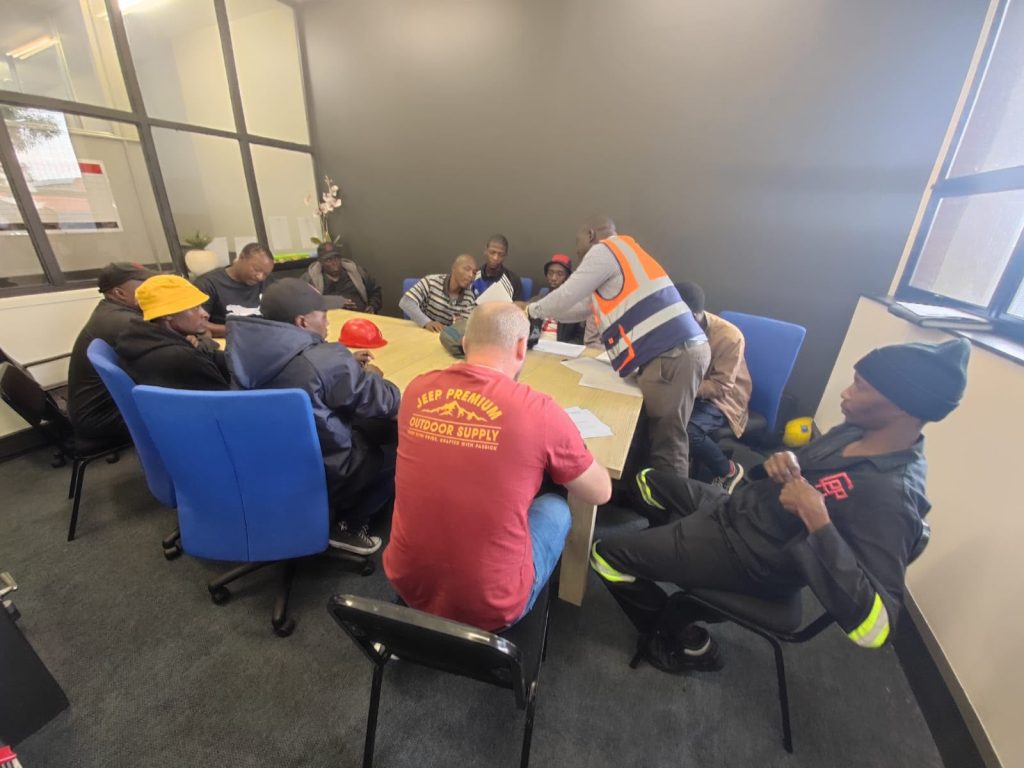
Our team is available to travel to companies across South Africa to provide professional on-site training for your employees.
Whether you need to train a small group or an entire workforce, we deliver the same high standard of practical, industry-focused instruction at your premises. We work with businesses of all sizes and can schedule training at times that suit your operations.
Partner with us to keep your workforce skilled, compliant, and workplace-ready.
EXPLORE OUR COURSES
We offer a wide range of practical training courses designed to help learners develop the skills and knowledge needed for careers in transport, construction, mining, engineering, industrial operations, safety, and skilled trades. Explore our courses below and choose the training programme that best matches your career goals. Learn more on Plumbing Courses and Prices
TECHNICAL TRADES
Plumbing Training · Carpentry Training · Pipe Fitter Training · Boilermaking Training · Electrical Training · Welding Training · Arc Welding Training · Double Coded Welding Training · CO₂ Welding Training · Stick Welding Training · Gas Welding Training · TIG Welding Training · MIG Welding Training · Aluminium Welding Training · Argon Welding Training · Stainless Steel Welding Training . Pipe Welding Training . Cutting Torch Training
HEALTH & SAFETY
Hazchem Training · Working at Heights Training · Safety Officer Training · Rigging Training · First Aid Training · Fire Fighter Training . SHE Rep Training . HIV/AIDS Awareness Training . HIRA Training . Legal Liability Training
HEAVY EQUIPMENT & MACHINERY
Superlink Training · Reach Stacker Training · Forklift Training · 777 Dump Truck Training · ADT Dump Truck Training · Drill Rig Training · LHD Scoop Training · Mobile Crane Training · Excavator Training · TLB Training · Front End Loader Training · Tower Crane Training · Overhead Crane Training · Reach Truck Training · Grader Training · Bulldozer Training · Bobcat Training · Road Roller Training · Truck Mounted Crane Training · Tractor Training · Telehandler Training · Tipper Truck Training · Superlink Reverse Training · Sidetipper Training · Horse and Trailer Training · Order Picker Training · Powered Pallet Truck Training · Cherry Picker Training · Water Cart Training
FAQs
What is Plumbing Training?
Plumbing Training provides learners with the knowledge and skills required to install, maintain, repair, and work with plumbing systems in residential, commercial, and industrial environments.
How long does Plumbing Training take?
Our Plumbing Training Course takes 4 weeks to complete, combining theory training, practical hands-on training, and competency assessment.
How much does Plumbing Training cost?
Our Plumbing Training Course costs R8,500, including theory training, practical training, and competency assessment.
Is Plumbing Training easy to learn?
Yes. With professional instruction, hands-on guidance, and consistent practice, learners can develop the knowledge and skills required to perform basic plumbing work safely and effectively.
What does Plumbing Training cover?
The course covers plumbing systems, water supply, drainage and waste systems, plumbing tools, pipes and fittings, fixtures and appliances, pipework, leak detection, maintenance, repairs, and workplace safety.
Is Plumbing Training practical?
Yes. Learners receive hands-on training in measuring and cutting pipes, joining pipework, installing plumbing fixtures, connecting water and drainage systems, testing for leaks, repairing pipes, and carrying out basic plumbing maintenance.
Where can a Plumber work?
Plumbers can pursue opportunities in construction, residential development, commercial buildings, property maintenance, industrial facilities, plumbing companies, infrastructure development, hospitality, and facilities management.
What career opportunities are available after Plumbing Training?
Completing Plumbing Training can prepare learners for roles such as Plumber, Plumbing Assistant, Plumbing Technician, Maintenance Plumber, Plumbing Installer, Pipe Fitter, Drainage Technician, and Plumbing Maintenance Worker.
How much does a Plumber earn in South Africa?
A Plumber in South Africa can earn around R565,222 annually, which is approximately R47,102 per month before deductions. Actual earnings may vary depending on experience, employer, location, qualifications, and type of plumbing work.
Plumbing Training Fees, Course Prices & Certificate: Learners can contact us for the latest Plumbing training fees and course prices, Training Academy Cost Price List including available classes, training requirements, assessment, and certification. The Plumbing certificate cost may depend on the selected training programme and assessment requirements. Learners can also enquire about Basic Short Plumbing Course, Plumber certification, Plumbing courses, Plumber courses, Plumbing classes, Plumber classes, and training availability near you. If you are searching for Plumbing training near me, Plumber training near me, Plumbing courses near me, Plumber courses near me, Plumbing classes near me, Plumber classes near me, or a Plumbing training school near me, contact us for course availability, fees, certification information, and enrolment information on WhatsApp +27 814 732 638.