
We are registered with the Department of Higher Education and Training under the Continuing Education and Training Act No. 16 of 2006. DHET Centre Number: 899994812. Further accredited by the Quality Council for Trades and Occupations (QCTO) Accreditation Number: 07-QCTO/SDP110722.
Accredited with CETA ACCREDITATION NO: ACC/23/07/00015 and TETA ACCREDITATION NO: TETA 22-1553 under the Skills Development Act, 97 of 1998. Company Registration Number: 2013/224763/07.
Hazard Identification and Risk Assessment (HIRA) Training Course
Unit Standard Number: 244383
Unit Standard Credits: 2
NQF Level: 2
Course Duration: 1 Day
Course Fee: R 2,300 per person
Upon successful completion of the course, learners will receive a certificate. We also offer free accommodation and job assistance to help graduates explore employment opportunities after completing their training.
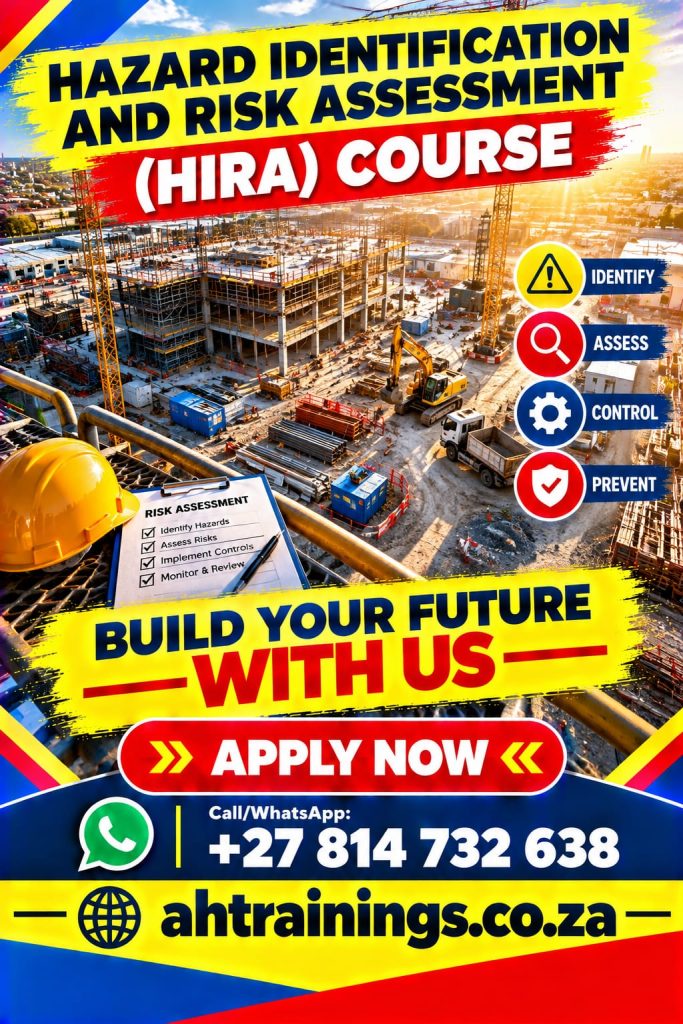
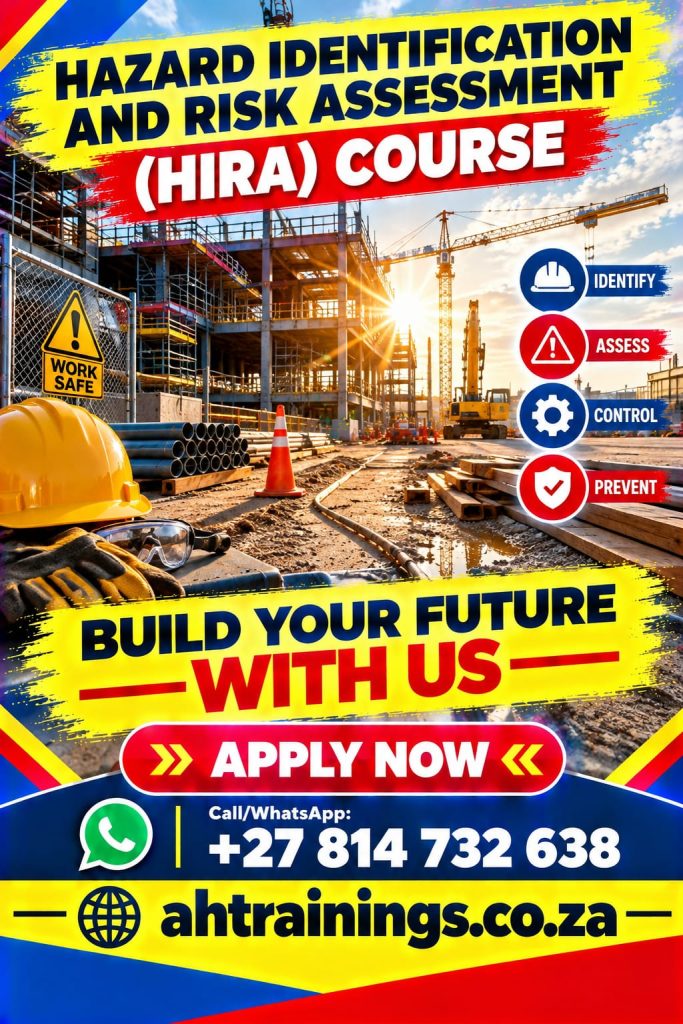
Our Hazard Identification and Risk Assessment (HIRA) training introduces learners to the processes used to identify workplace hazards, evaluate risks and implement suitable control measures. The course develops an understanding of how to recognise unsafe conditions, assess potential harm and contribute to a safer working environment. It is suitable for employees, supervisors, team leaders and individuals involved in workplace health and safety.
1. How much does a HIRA course cost?
Our Hazard Identification and Risk Assessment course costs R2,300 per person and takes 1 day to complete. Training introduces learners to hazard identification, risk evaluation, risk control measures and the principles of conducting workplace risk assessments.
2. What is Hazard Identification and Risk Assessment (HIRA)?
HIRA is a systematic process used to identify hazards in the workplace, determine the risks associated with those hazards and establish appropriate control measures.
Hazard identification focuses on recognising anything that has the potential to cause injury, illness, property damage or environmental harm. Risk assessment evaluates the likelihood of an incident occurring and the possible severity of its consequences.
The process helps organisations identify risks before incidents happen and plan appropriate preventive measures.
3. What do you learn in HIRA training?
The course introduces learners to the essential principles and procedures involved in workplace hazard identification and risk assessment.
Training topics include:
Introduction to occupational health and safety.
Understanding hazards and risks.
Identifying workplace hazards.
Recognising unsafe acts and unsafe conditions.
Identifying potential sources of injury and illness.
Assessing the likelihood and severity of harm.
Understanding risk-rating methods.
Applying the hierarchy of controls.
Selecting suitable risk control measures.
Recording and reporting identified hazards.
Reviewing and updating risk assessments.
4. What is the difference between a hazard and a risk?
A hazard is anything with the potential to cause harm, while a risk refers to the likelihood of that harm occurring and the possible consequences.
For example, an exposed electrical cable is a hazard. The risk includes the possibility of someone receiving an electric shock or suffering serious injury through contact with the exposed cable.
Understanding this difference helps learners identify workplace dangers and assess the level of risk associated with each hazard.
5. What are the different types of workplace hazards?
Workplace hazards can occur in different forms depending on the industry, equipment, activities and working environment.
Common categories include:
Physical hazards: Noise, vibration, heat, moving machinery and falling objects.
Chemical hazards: Harmful gases, fumes, vapours, liquids and dust.
Biological hazards: Bacteria, viruses and other biological agents.
Ergonomic hazards: Poor working posture, repetitive movements and manual handling.
Mechanical hazards: Unguarded machinery, rotating equipment and moving parts.
Electrical hazards: Exposed wiring, damaged electrical equipment and unsafe connections.
Environmental hazards: Poor lighting, slippery surfaces and inadequate ventilation.
6. How do you conduct a workplace risk assessment?
A risk assessment follows a structured process to identify hazards, evaluate risks and determine appropriate control measures.
The main steps include:
Identify the work activities and tasks being performed.
Identify hazards associated with each activity.
Determine who could be harmed and how.
Evaluate the likelihood and severity of potential harm.
Determine the level of risk.
Select suitable control measures.
Record the findings and communicate them to relevant employees.
Review the assessment when conditions or work activities change.
7. What is the hierarchy of risk controls?
The hierarchy of controls is a system used to select measures for eliminating or reducing workplace risks. It prioritises the most effective controls before relying on measures that offer less protection.
The five levels are:
Elimination: Completely remove the hazard.
Substitution: Replace the hazardous material, process or equipment with a safer alternative.
Engineering controls: Isolate people from hazards through physical changes, guards or protective systems.
Administrative controls: Introduce safe work procedures, training, warning signs and work schedules.
Personal protective equipment (PPE): Provide protective clothing and equipment to reduce exposure to hazards.
Using higher-level controls wherever reasonably practicable helps create safer working conditions.
8. What is a risk assessment matrix?
A risk assessment matrix is a tool used to evaluate and classify workplace risks. It generally considers two factors: the likelihood of an incident occurring and the severity of the possible consequences.
The combination of these factors produces a risk rating, which helps organisations prioritise hazards and determine the level of control required.
Risk matrices can classify risks as low, medium, high or extreme, depending on the organisation’s assessment method.
9. Who should attend HIRA training?
HIRA training is useful for individuals who are involved in identifying workplace hazards, monitoring safety conditions or supporting occupational health and safety activities.
The course is suitable for:
Health and safety representatives.
Safety officers and supervisors.
Team leaders and managers.
Construction workers.
Factory and production employees.
Warehouse and logistics personnel.
Maintenance workers.
Employees responsible for workplace inspections.
10. Where is Hazard Identification and Risk Assessment used?
HIRA principles are applied across industries where workplace activities, equipment, materials and environmental conditions can create safety risks.
Common environments include:
Construction sites.
Mining operations.
Manufacturing plants.
Warehouses and distribution centres.
Engineering workshops.
Industrial facilities.
Transport and logistics operations.
Offices and commercial buildings.
11. Do you receive a HIRA certificate after training?
Learners who successfully complete the required training and assessment receive a Hazard Identification and Risk Assessment training certificate confirming completion of the programme. The certificate can be included in a CV as evidence of HIRA training.
12. What are the requirements for HIRA training?
The course is suitable for beginners, employees, supervisors and individuals interested in workplace health and safety. Previous HIRA experience is not essential.
Learners should be prepared to:
Participate in theoretical instruction.
Understand basic workplace safety principles.
Identify common workplace hazards.
Participate in risk assessment exercises.
Learn how to select appropriate control measures.
Complete the required course assessment.

Not Familiar with Johannesburg or Gauteng?
No problem! We offer FREE transport from the following pick-up points to our training centre:
📍 MTN Taxi Rank
📍 Johannesburg Park Station
📍 Germiston Taxi Rank
📍 O.R. Tambo International Airport







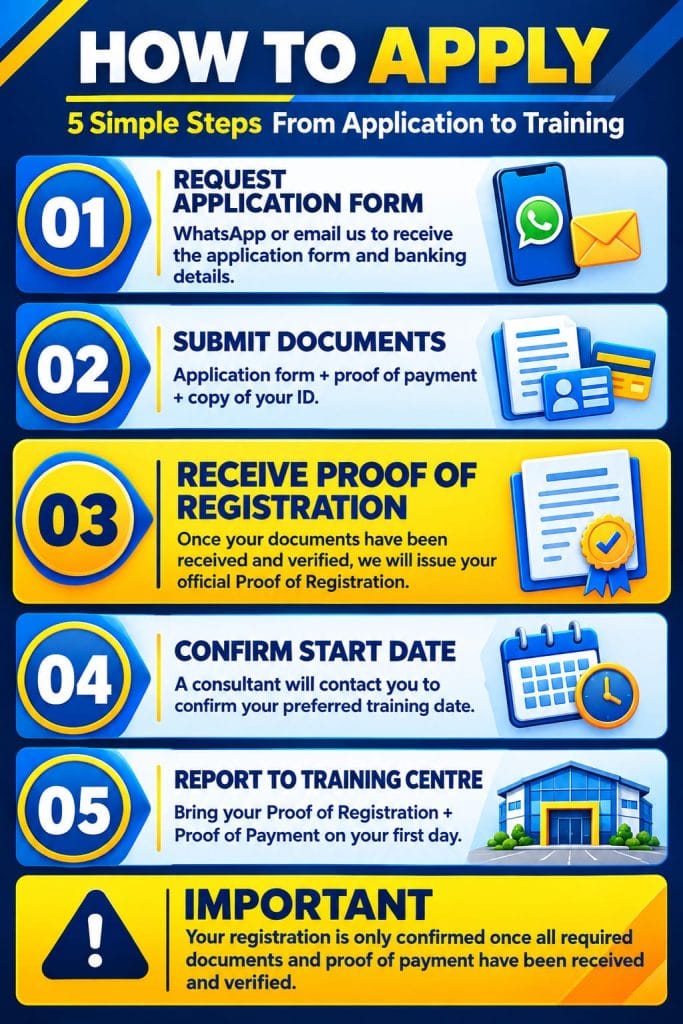

Get in Touch with Us, Send us a Email
Employment Opportunities
After successfully completing your Training, you are welcome to submit your CV to cv@ahtrainings.co.za. We are regularly contacted by recruitment agencies and employers seeking qualified and competent candidates, and we may refer suitable candidates when opportunities become available.
Graduates are also encouraged to actively apply for positions through leading online job portals such as Indeed, CareerJunction, LinkedIn, and other recruitment platforms to increase their employment opportunities.
While successful completion of the course enhances your employability, securing employment remains subject to the recruitment process and the requirements of individual employers. Our goal is to help equip you with the skills and qualifications needed to pursue rewarding career opportunities.
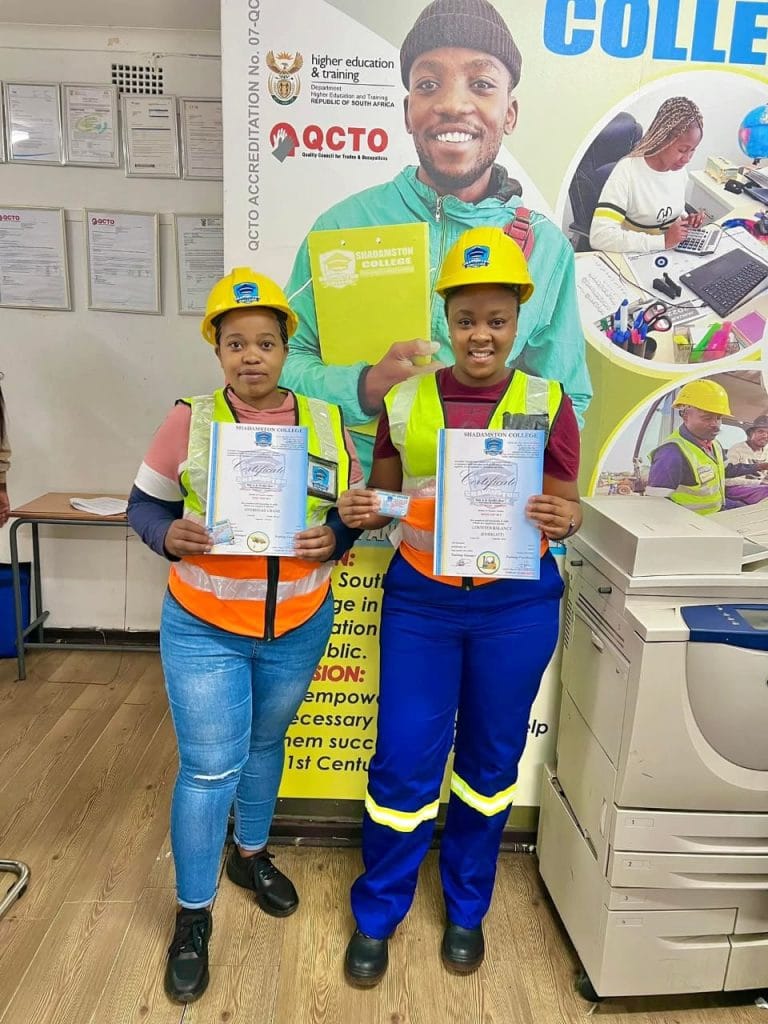
Career Opportunities
Completing Hazard Identification and Risk Assessment (HIRA) Training can help learners develop knowledge and skills relevant to workplace health and safety, hazard prevention, and risk management. Learners may apply their knowledge in roles and activities such as Health and Safety Assistant, HIRA Assistant, Risk Assessment Assistant, Safety Representative, Workplace Safety Coordinator, Occupational Health and Safety Assistant, Site Safety Assistant, and Safety Supervisor, depending on their qualifications, experience, and employer requirements. These skills can be applied across sectors such as construction, mining, manufacturing, warehousing, transport and logistics, engineering, healthcare, agriculture, energy, and industrial operations.

On-Site Company Training
We bring the training to you.
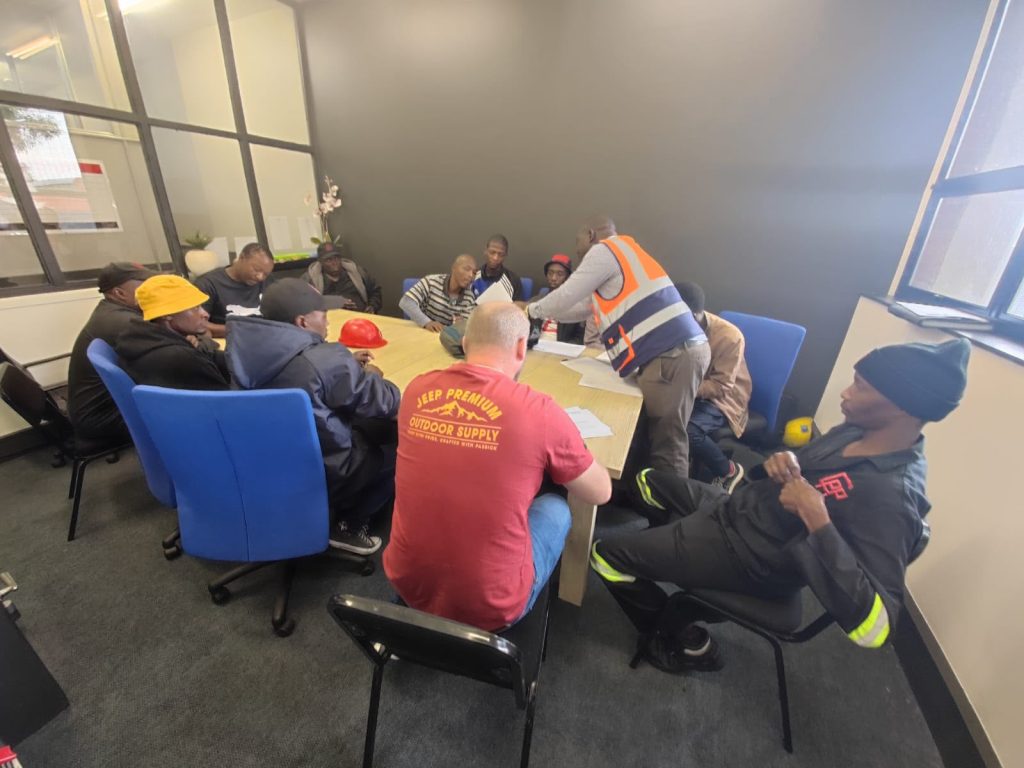
Our team is available to travel to companies across South Africa to provide professional on-site training for your employees.
Whether you need to train a small group or an entire workforce, we deliver the same high standard of practical, industry-focused instruction at your premises. We work with businesses of all sizes and can schedule training at times that suit your operations.
Partner with us to keep your workforce skilled, compliant, and workplace-ready.
EXPLORE OUR COURSES
We offer a wide range of practical training courses designed to help learners develop the skills and knowledge needed for careers in transport, construction, mining, engineering, industrial operations, safety, and skilled trades. Explore our courses below and choose the training programme that best matches your career goals.
HEAVY EQUIPMENT & MACHINERY
Superlink Training · Reach Stacker Training · Forklift Training · 777 Dump Truck Training · ADT Dump Truck Training · Drill Rig Training · LHD Scoop Training · Mobile Crane Training · Excavator Training · TLB Training · Front End Loader Training · Tower Crane Training · Overhead Crane Training · Reach Truck Training · Grader Training · Bulldozer Training · Bobcat Training · Road Roller Training · Truck Mounted Crane Training · Tractor Training · Telehandler Training · Tipper Truck Training · Superlink Reverse Training · Sidetipper Training · Horse and Trailer Training · Order Picker Training · Powered Pallet Truck Training · Cherry Picker Training · Water Cart Training
HEALTH & SAFETY
Hazchem Training · Working at Heights Training · Safety Officer Training · Rigging Training · First Aid Training · Fire Fighter Training . SHE Rep Training . HIV/AIDS Awareness Training . HIRA Training . Legal Liability Training
TECHNICAL TRADES
Plumbing Training · Carpentry Training · Pipe Fitter Training · Boilermaking Training · Electrical Training · Welding Training · Arc Welding Training · Double Coded Welding Training · CO₂ Welding Training · Stick Welding Training · Gas Welding Training · TIG Welding Training · MIG Welding Training · Aluminium Welding Training · Argon Welding Training · Stainless Steel Welding Training . Pipe Welding Training . Cutting Torch Training
Hazchem / Dangerous Goods Training Fees, Course Prices & Certificate: Learners can contact us for the latest Hazchem / Dangerous Goods or DG training fees and course prices, Training Academy Cost Price List including available classes, training requirements, assessment, and certification. The Hazchem / Dangerous Goods certificate cost may depend on the selected training programme and assessment requirements. Learners can also enquire about Hazchem / Dangerous Goods DG certification, driver training, licence (license) requirements, workplace certification, and training availability near you. If you are searching for Hazchem training near me, Dangerous Goods DG training near me, Hazchem Driver training near me, Dangerous Goods DG Driver training near me, Hazchem licence near me, Hazchem license near me, Dangerous Goods DG licence near me, Dangerous Goods DG license near me, Hazchem courses near me, Dangerous Goods DG courses near me, Hazchem classes near me, or a Hazchem / Dangerous Goods DG training school near me, contact us for course availability, fees, licence (license) requirements, and enrolment information