
We are registered with the Department of Higher Education and Training under the Continuing Education and Training Act No. 16 of 2006. DHET Centre Number: 899994812. Further accredited by the Quality Council for Trades and Occupations (QCTO) Accreditation Number: 07-QCTO/SDP110722.
Accredited with CETA ACCREDITATION NO: ACC/23/07/00015 and TETA ACCREDITATION NO: TETA 22-1553 under the Skills Development Act, 97 of 1998. Company Registration Number: 2013/224763/07.
Welding Course
Unit Standard Number: 10810
Unit Standard Credits: 6
NQF Level: 3
Course Duration: 4 Weeks
Course Fee: R 8,500 per person
Personal Protective Equipment (PPE): Required
Upon successful completion of the course, learners will receive a certificate. We also offer free accommodation and job assistance to help graduates explore employment opportunities after completing their training.
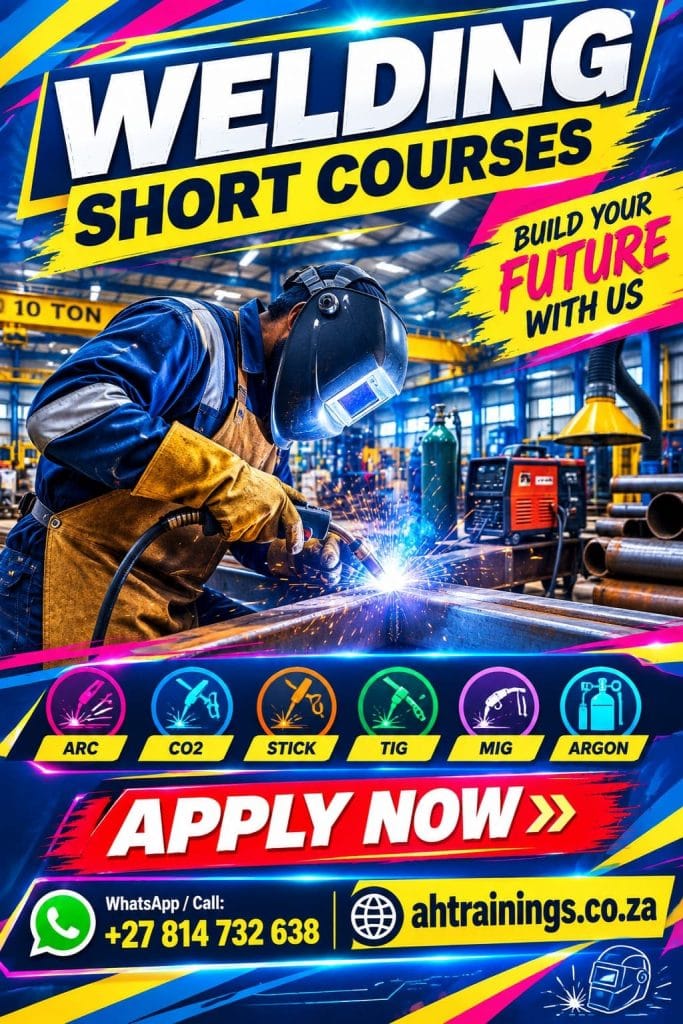
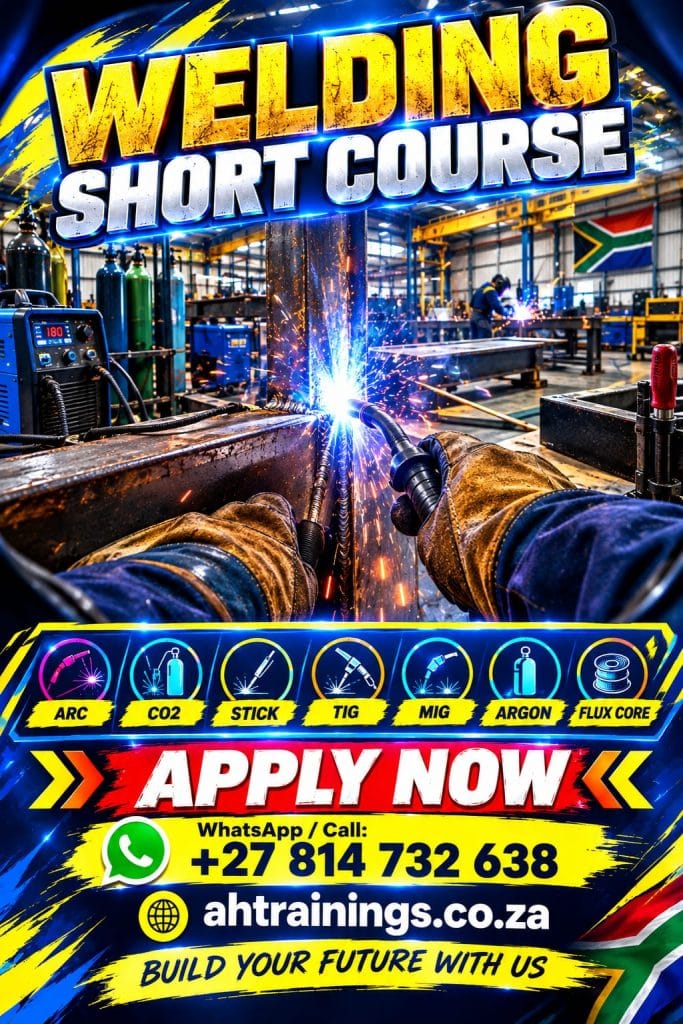
Welding is an essential skill in construction, manufacturing, engineering, metal fabrication and general metalworking. Our basic Welding Training Course introduces learners to welding equipment, metal preparation, joining techniques and practical workshop procedures. Whether you want to develop new skills, work towards entry-level opportunities or learn how metal components are joined and repaired, our 4-week course provides a foundation in welding theory, practical techniques and workplace safety.
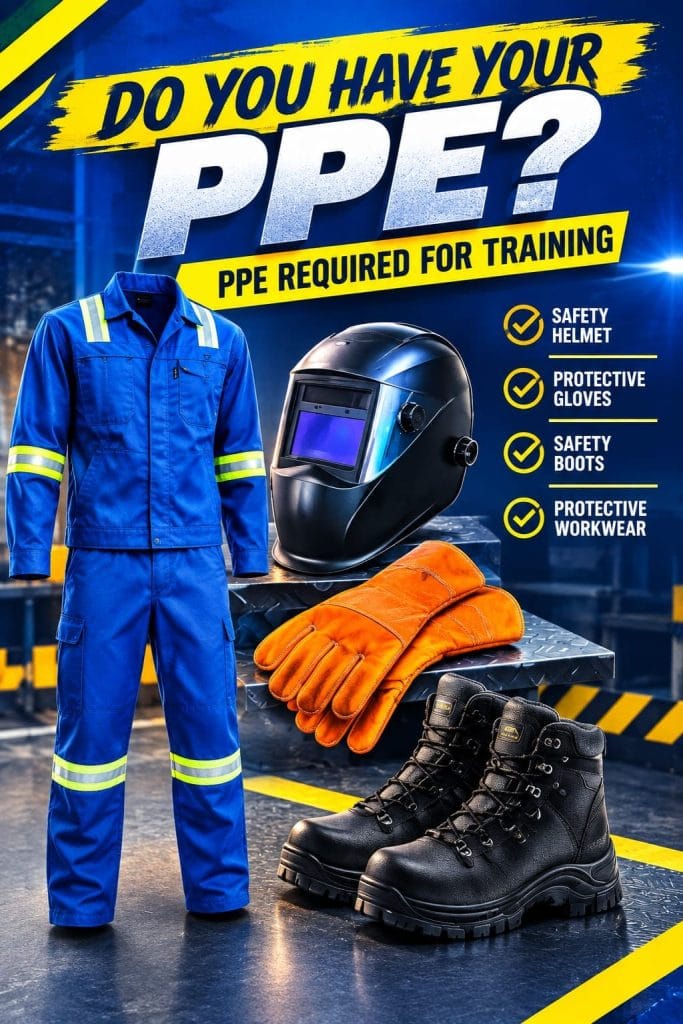
Personal Protective Equipment (PPE)
You can either bring your own PPE for training or purchase it from the college for an additional R1,000.
Required PPE: Overall, Safety Helmet, Gloves, Safety Boots.
Please Note: The PPE shown in the image is for illustration purposes only. Your PPE does not need to look exactly like the example shown. As long as you have the required PPE listed above, you are welcome to bring your own.
How much does welding training cost?
Our basic Welding Training Course costs R8,500 per person for 4 weeks of training. The course combines foundational knowledge with practical skills development, helping learners understand welding equipment, prepare metal surfaces, practise basic welding techniques and produce simple welded joints. It is suitable for beginners who want to build a foundation in welding and metal fabrication.
Is welding difficult to learn?
Welding is a practical skill that becomes easier with instruction, demonstration and regular practice. Beginners start by learning how welding equipment works, how to prepare metal and how to maintain control when joining metal components. As they gain experience, they develop better hand coordination, accuracy and confidence.
Learning welding also involves understanding how heat affects metal, choosing suitable welding consumables and recognising the characteristics of a good weld. Our basic training introduces these fundamentals progressively, helping learners build their skills without needing advanced welding experience before starting.
What does a Welding Course cover?
Our basic Welding Course introduces learners to essential welding principles, equipment and practical metalworking techniques. Training covers:
Introduction to welding: Understanding how welding joins metal components and where welding is used in construction, fabrication and manufacturing.
Welding equipment and tools: Identifying welding machines, electrode holders, earth clamps, cables, electrodes and other essential equipment.
Types of welding: Introduction to common welding processes, including arc welding and other techniques covered during practical training.
Metal preparation: Measuring, marking, cleaning and preparing metal surfaces before welding.
Cutting and grinding: Understanding basic metal cutting, edge preparation and grinding procedures.
Welding joints: Learning about butt joints, lap joints, corner joints and T-joints.
Welding techniques: Practising basic welding movements, electrode control and weld bead formation.
Welding positions: Introduction to basic welding positions and how positioning affects the welding process.
Weld quality: Recognising common welding defects, understanding their causes and learning how to improve weld appearance and consistency.
Materials and consumables: Understanding basic metal types, electrode selection and the importance of using suitable materials.
Workshop safety: Using personal protective equipment (PPE), preventing burns, managing fire risks and following safe equipment-handling procedures.
Equipment care: Understanding basic welding machine care, cable inspection and proper storage of tools and consumables.
The practical component helps learners apply the techniques introduced during training and develop familiarity with welding equipment and workshop procedures.
Where can a welder work?
Welding skills are used across many industries that manufacture, assemble, maintain and repair metal structures and components. Learners who develop suitable practical ability can pursue relevant entry-level opportunities in environments such as:
Welding and fabrication workshops: Assisting with metal cutting, joining, fabrication and repair tasks.
Construction companies: Supporting metalwork involving structural components, brackets and steel installations.
Manufacturing facilities: Assisting with the production and assembly of metal products.
Steel fabrication businesses: Working with frames, supports, gates, railings and other fabricated items.
Engineering workshops: Supporting general metalworking, equipment maintenance and fabrication activities.
Gate and fence manufacturing: Helping manufacture, assemble and repair metal gates, fences and security structures.
Automotive repair workshops: Assisting with suitable metal repair and fabrication tasks.
Industrial maintenance companies: Supporting basic maintenance and metal repair work under appropriate supervision.
Metal furniture manufacturing: Helping produce tables, frames, stands and other metal furniture.
Small welding businesses: Applying basic skills to suitable fabrication and repair projects as experience develops.
What career opportunities are available after welding training?
After completing our basic Welding Training Course, learners can pursue suitable entry-level opportunities such as welding assistant, fabrication assistant, trainee welder or workshop assistant. These positions can provide opportunities to gain workplace experience, improve welding techniques and become familiar with industry tools, materials and production procedures.
The skills acquired can also be useful for people interested in metal fabrication, gate manufacturing, general metal repairs and small workshop projects. As learners gain experience, they can develop more advanced welding abilities and explore specialised processes used in different industries.
Welding offers a practical skill foundation for individuals interested in working with metal. Employers assess candidates according to the job requirements, practical performance, experience and any additional qualifications required for the particular welding process.
Can I get a welding certificate after training?
Yes, learners who successfully complete the course requirements receive a Welding Training Certificate. The certificate provides evidence that you completed our basic welding training and can support applications for relevant entry-level positions in welding, fabrication and metalworking.
The course helps learners develop foundational knowledge and practical skills that can be built upon through further training and workplace experience. Specialised welding positions can require additional process-specific training, practical assessments or recognised welder qualifications, depending on the employer and industry.
What are the requirements for welding training?
Our basic Welding Course is suitable for beginners who want to learn welding and develop practical metalworking skills. You do not need advanced welding experience to start learning the fundamentals.
Learners should be able to understand instructions, concentrate during practical activities and follow workshop safety procedures. Basic measuring skills, hand-eye coordination and attention to detail are helpful when preparing metal and practising welding techniques.
A willingness to learn, work carefully with tools and follow instructions is important. Learners must also be prepared to use the required personal protective equipment and maintain safe working practices around welding machines, hot metal, sparks and grinding equipment.

Not Familiar with Johannesburg or Gauteng?
No problem! We offer FREE transport from the following pick-up points to our training centre:
📍 MTN Taxi Rank
📍 Johannesburg Park Station
📍 Germiston Taxi Rank
📍 O.R. Tambo International Airport


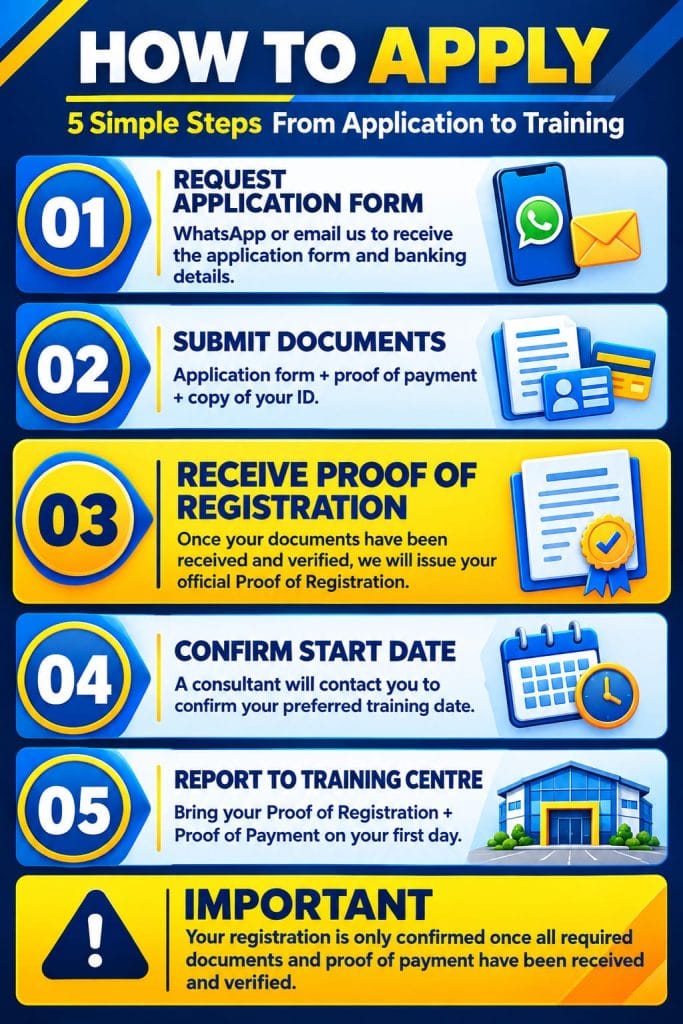

Get in Touch with Us, Send us a Email
Employment Opportunities
After successfully completing your Training, you are welcome to submit your CV to cv@ahtrainings.co.za. We are regularly contacted by recruitment agencies and employers seeking qualified and competent candidates, and we may refer suitable candidates when opportunities become available.
Graduates are also encouraged to actively apply for positions through leading online job portals such as Indeed, CareerJunction, LinkedIn, and other recruitment platforms to increase their employment opportunities.
While successful completion of the course enhances your employability, securing employment remains subject to the recruitment process and the requirements of individual employers. Our goal is to help equip you with the skills and qualifications needed to pursue rewarding career opportunities.
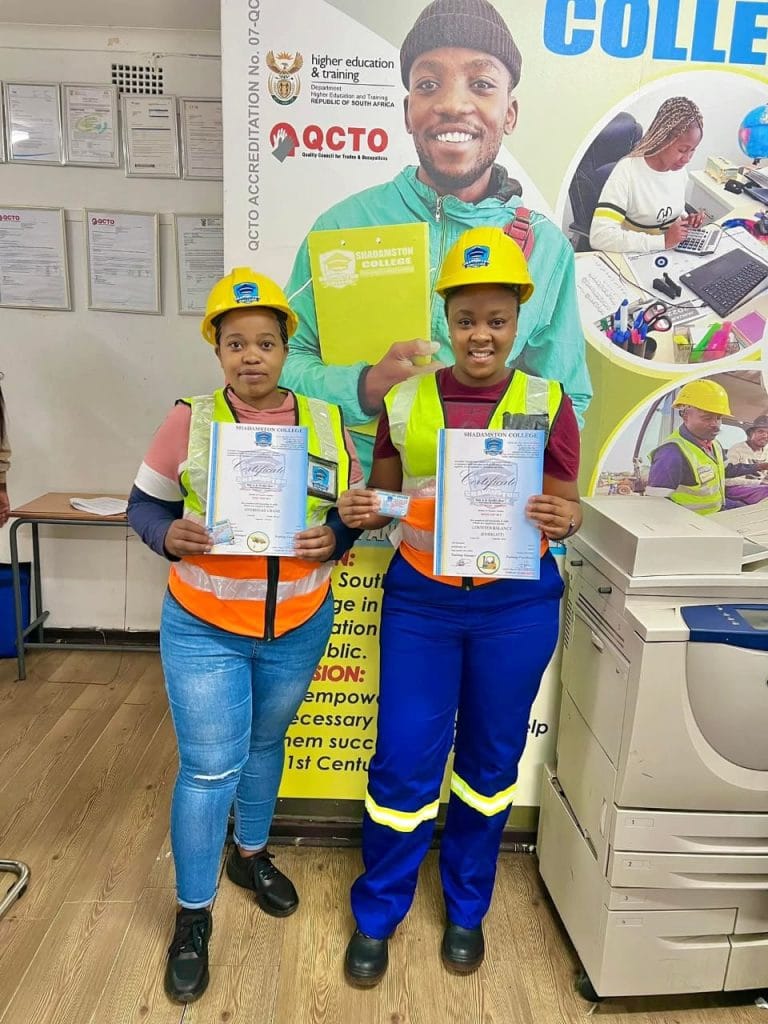
Career Opportunities
Completing Welding Training can prepare learners for employment opportunities as a Welder, General Welder, MIG Welder, TIG Welder, Stick Welder, Welding Fabricator, Welding Assistant, Production Welder, Structural Welder, and Maintenance Welder.
Welders can find opportunities in industries such as construction, manufacturing, fabrication, engineering, mining, automotive, infrastructure development, industrial maintenance, structural steelwork, and general metalworking.

On-Site Company Training
We bring the training to you.
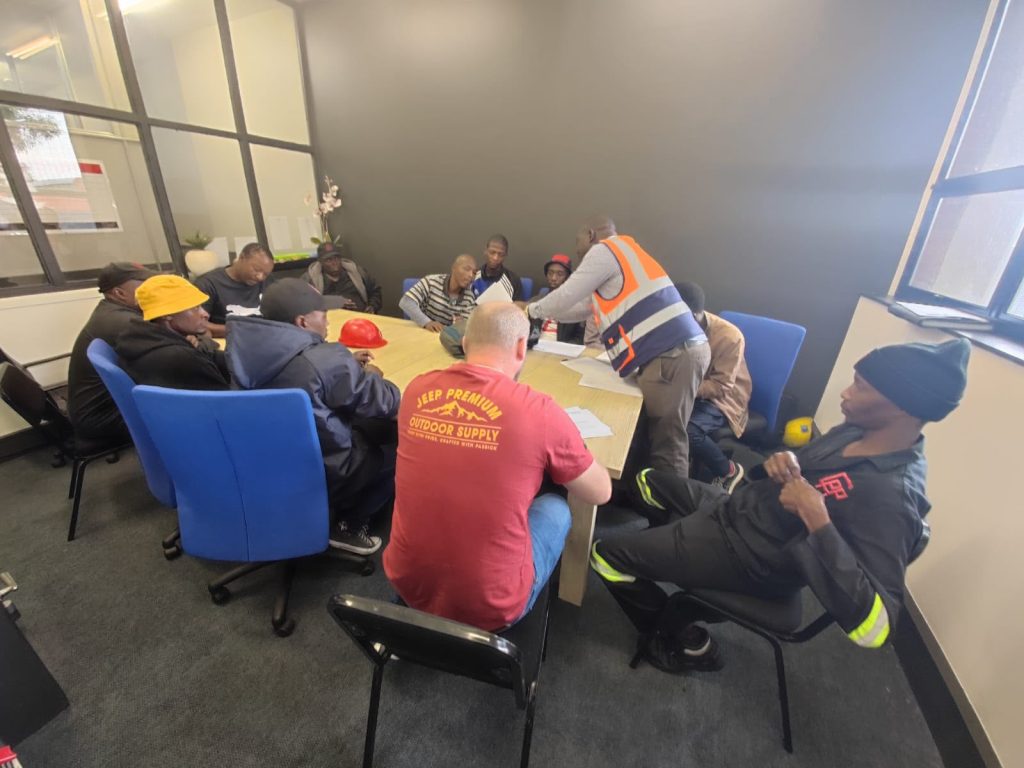
Our team is available to travel to companies across South Africa to provide professional on-site training for your employees.
Whether you need to train a small group or an entire workforce, we deliver the same high standard of practical, industry-focused instruction at your premises. We work with businesses of all sizes and can schedule training at times that suit your operations.
Partner with us to keep your workforce skilled, compliant, and workplace-ready.
EXPLORE OUR COURSES
We offer a wide range of practical training courses designed to help learners develop the skills and knowledge needed for careers in transport, construction, mining, engineering, industrial operations, safety, and skilled trades. Explore our courses below and choose the training programme that best matches your career goals.
TECHNICAL TRADES
Plumbing Training · Carpentry Training · Pipe Fitter Training · Boilermaking Training · Electrical Training · Welding Training · Arc Welding Training · Double Coded Welding Training · CO₂ Welding Training · Stick Welding Training · Gas Welding Training · TIG Welding Training · MIG Welding Training · Aluminium Welding Training · Argon Welding Training · Stainless Steel Welding Training . Pipe Welding Training . Cutting Torch Training
HEALTH & SAFETY
Hazchem Training · Working at Heights Training · Safety Officer Training · Rigging Training · First Aid Training · Fire Fighter Training . SHE Rep Training . HIV/AIDS Awareness Training . HIRA Training . Legal Liability Training
HEAVY EQUIPMENT & MACHINERY
Superlink Training · Reach Stacker Training · Forklift Training · 777 Dump Truck Training · ADT Dump Truck Training · Drill Rig Training · LHD Scoop Training · Mobile Crane Training · Excavator Training · TLB Training · Front End Loader Training · Tower Crane Training · Overhead Crane Training · Reach Truck Training · Grader Training · Bulldozer Training · Bobcat Training · Road Roller Training · Truck Mounted Crane Training · Tractor Training · Telehandler Training · Tipper Truck Training · Superlink Reverse Training · Sidetipper Training · Horse and Trailer Training · Order Picker Training · Powered Pallet Truck Training · Cherry Picker Training · Water Cart Training
Welding Training Fees, Course Prices & Certificate: Learners can contact us for the latest Welding training fees and course prices, Training Academy Cost Price List including available classes, training requirements, assessment, and certification. The Welding certificate cost may depend on the selected training programme and assessment requirements. Learners can also enquire about Basic Short Welding Course, Welding certification, Welder certification, Welding courses, Welder courses, Welding classes, and training availability near you. If you are searching for Welding training near me, Welder training near me, Welding courses near me, Welder courses near me, Welding classes near me, Welder classes near me, or a Welding training school near me, contact us for course availability, fees, and enrolment information